
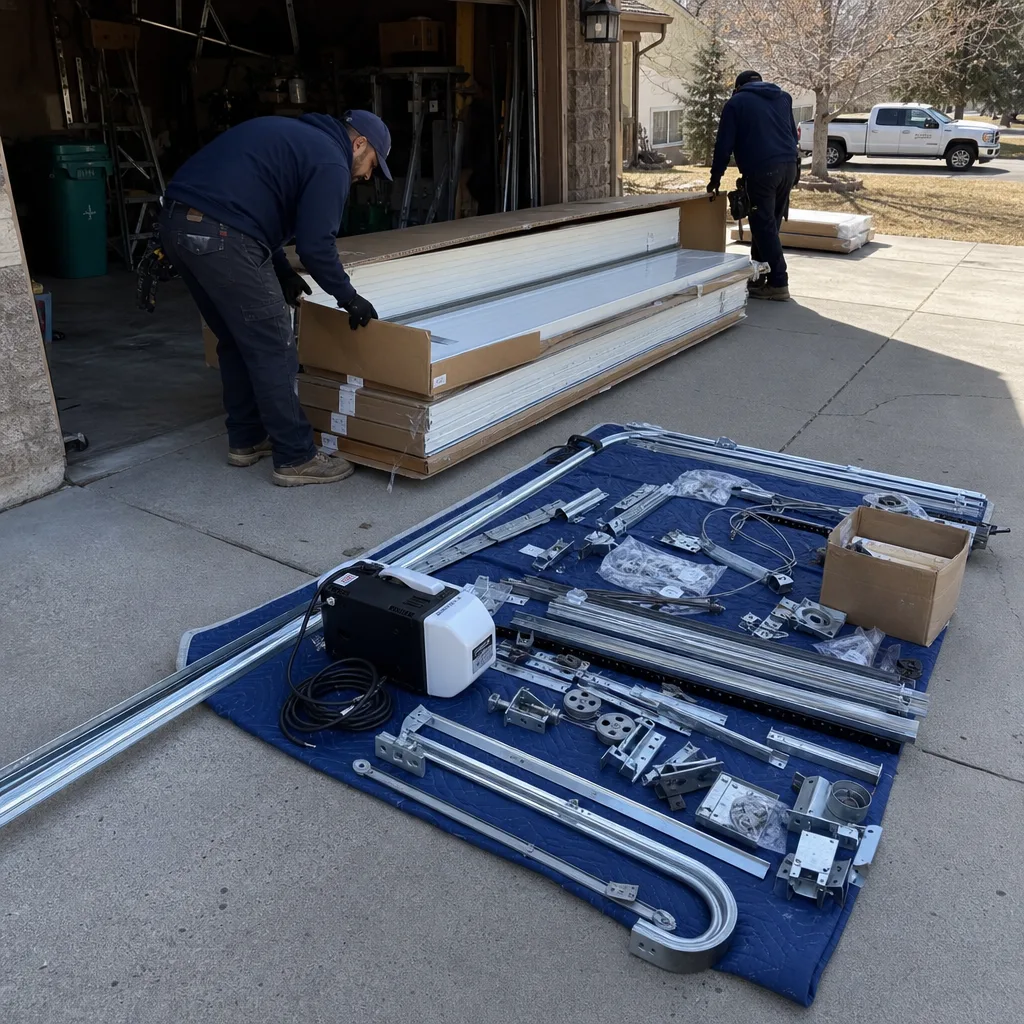
Last updated November 20, 2026
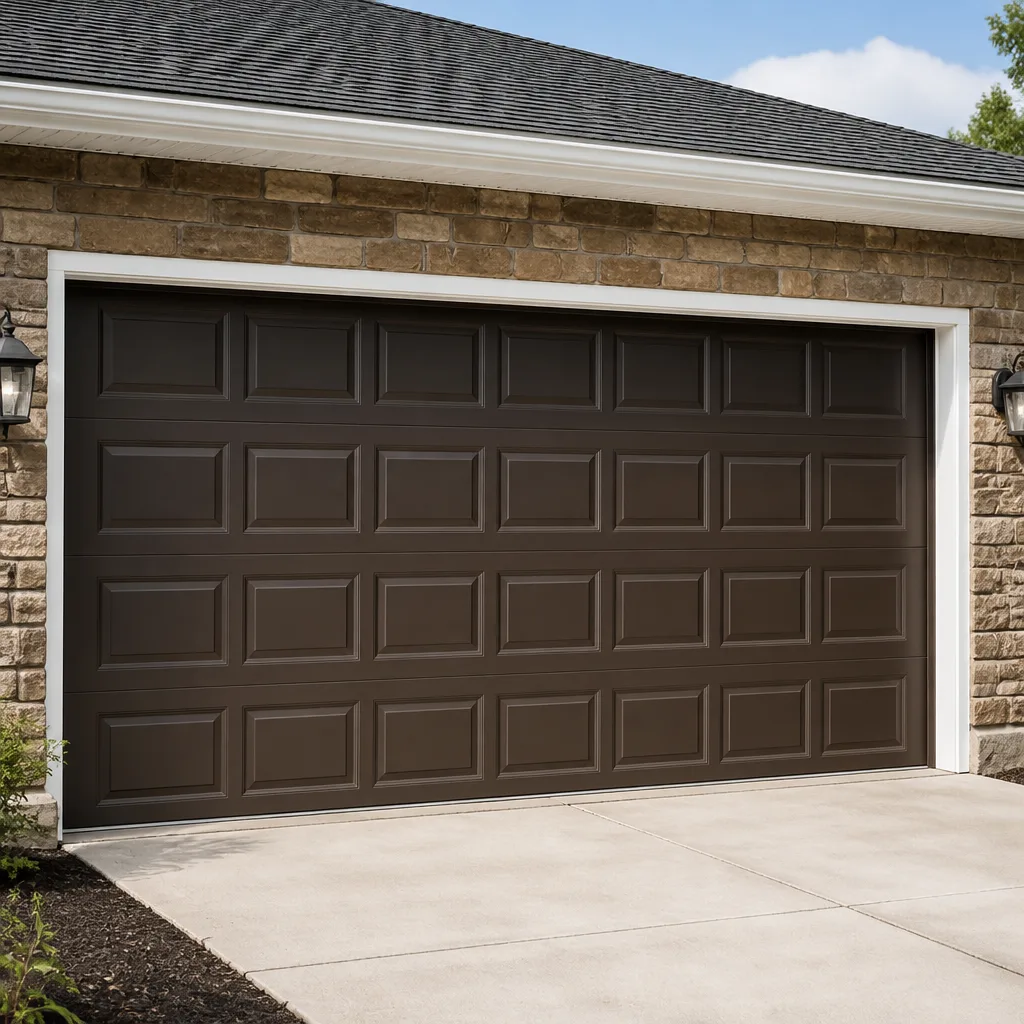 Raised-panel steel
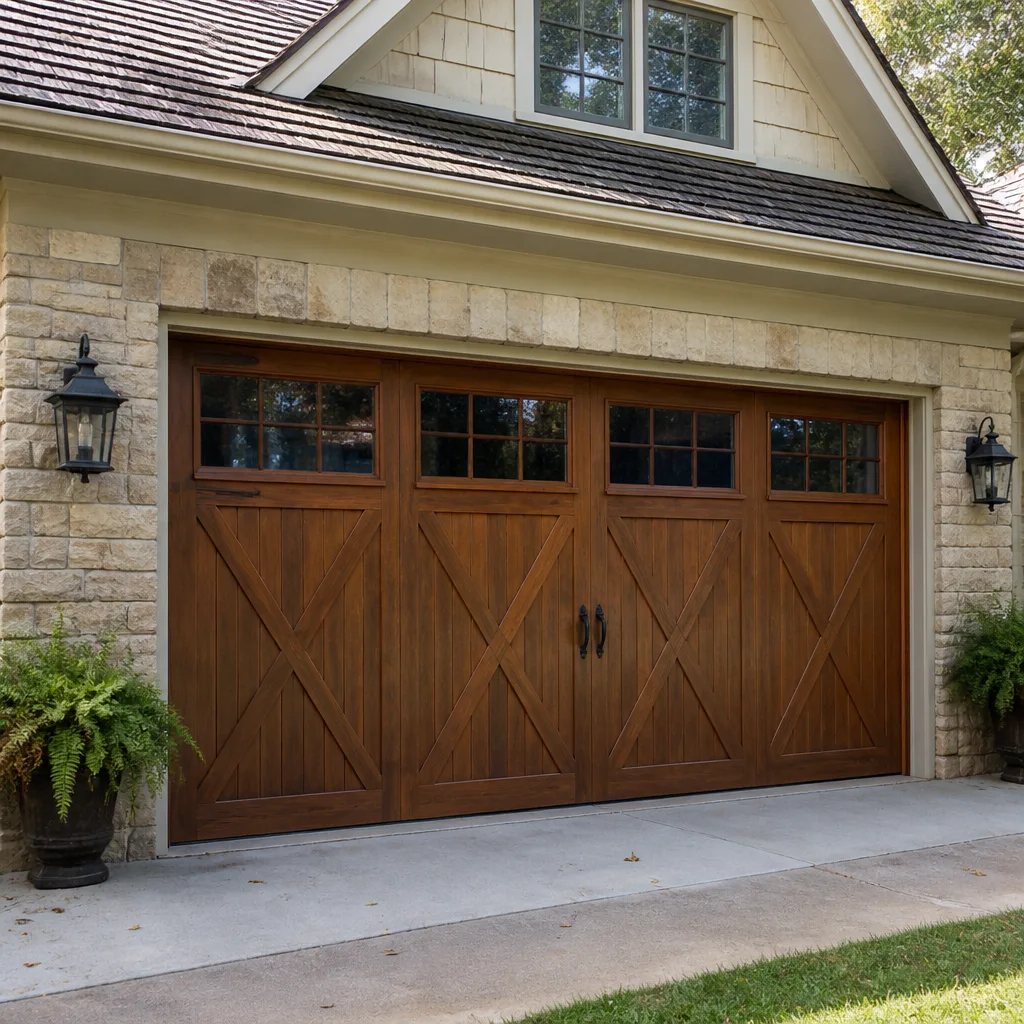 Carriage house
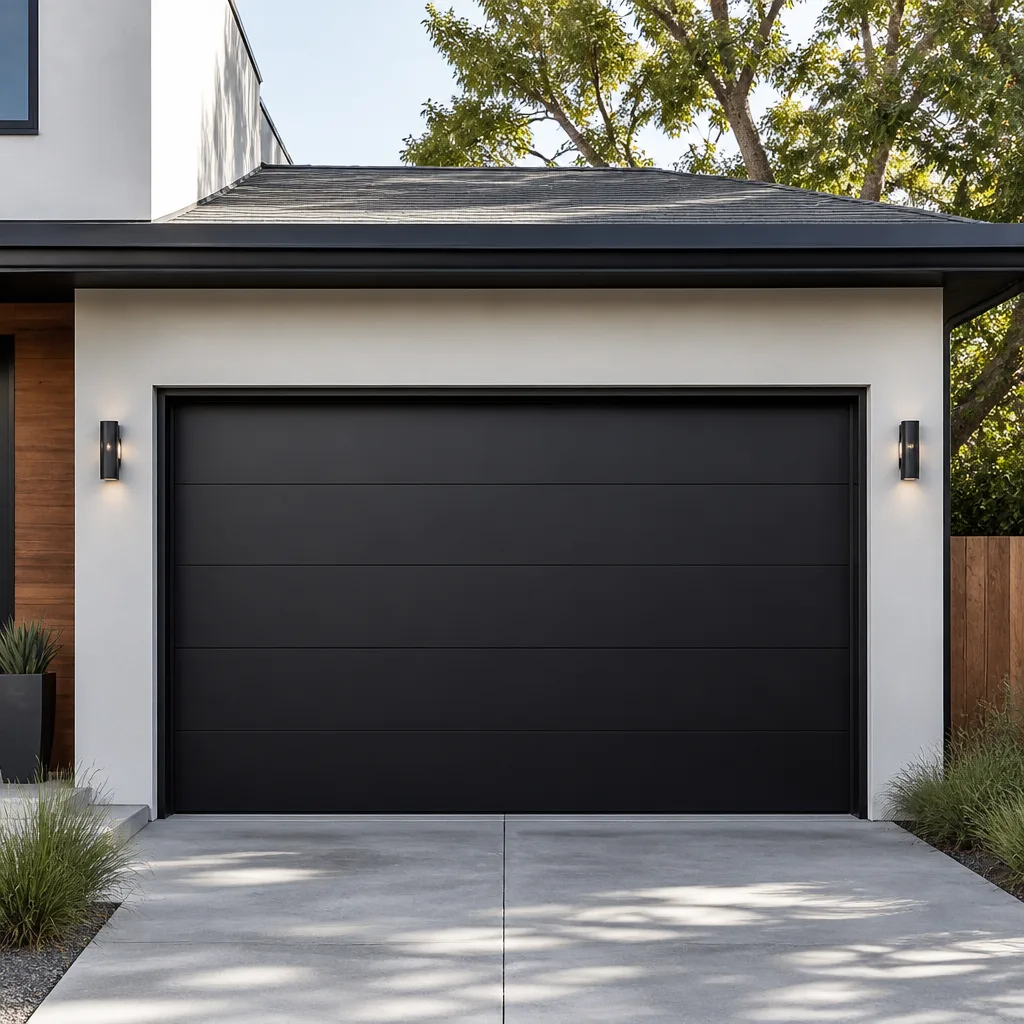 Modern flush
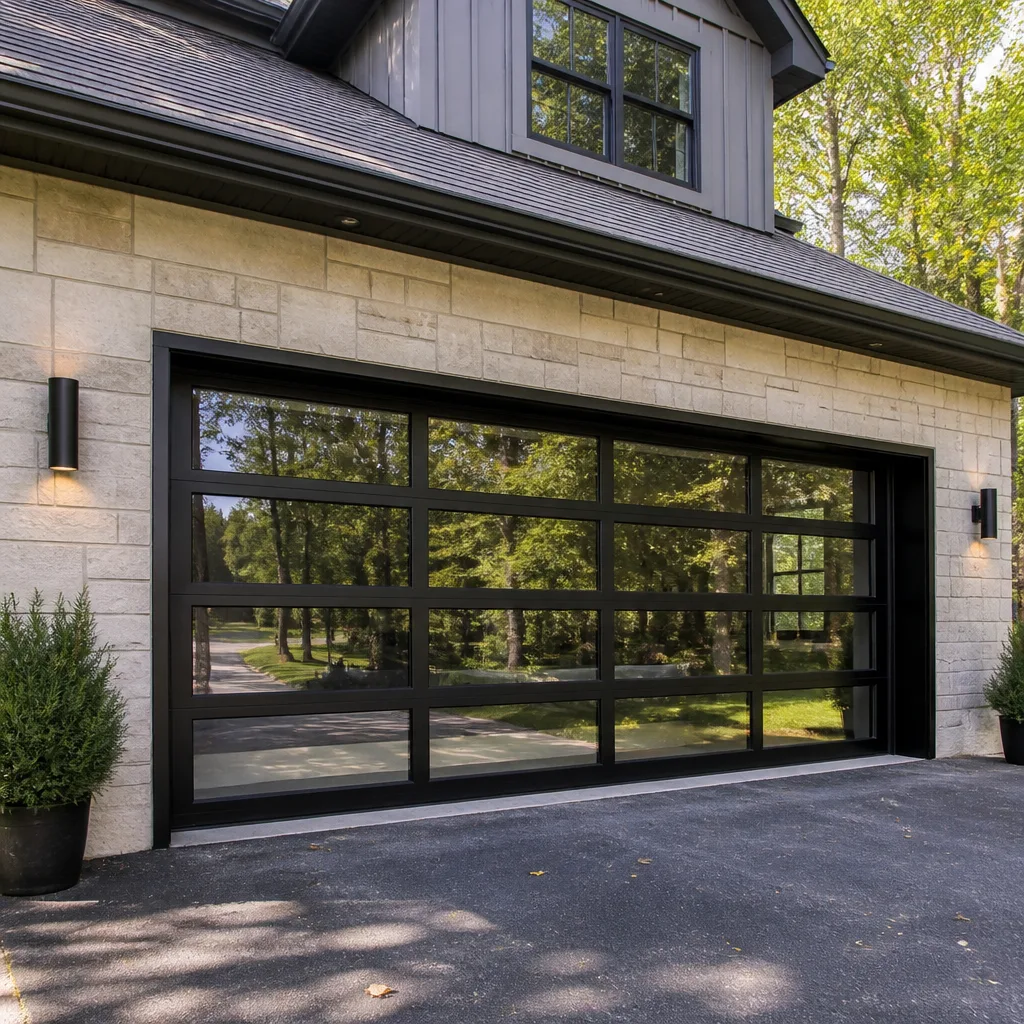 Full-view glass
 LiftMaster openers
 Chamberlain openers
Full 25-point door and opener safety check with every visit - springs, cables, rollers, tracks, and your LiftMaster or Chamberlain opener included
You get a price before we start. It does not change when the pro arrives.
Get your free estimateGarage Door Warning Signs: An Englewood Homeowner’s Reference Guide
Garage doors rarely fail without warning. They tell you first through a sound that’s slightly off, a movement that’s a little uneven, or a gap that wasn’t there last month. The homeowners who end up stranded in the driveway almost always noticed one of those things and waited. This guide is about the quiet signals that show up weeks before a door actually gives out, so you can act while the fix is still a repair. We’ll cover what’s normal, what’s not, how to read the parts you can see without a single tool, and how to sort the “schedule this soon” signs from the “stop using the door right now” ones. It’s written for Englewood homeowners who rely on that door every day.
Quick Answer
The most important garage door warning signs are a door that grows slower in cold weather, a grinding or popping sound that’s new, a door that sags on one side, visible cable fraying, and a door that won’t stay level when you lift it halfway. The first four usually mean schedule service this week. A door that won’t hold its position, a snapped spring, or a cable that’s come off the drum means stop using the door and call a professional. Early warning signs almost always cost less to fix than the failures that come after them.
Styles & brands we work with
- Raised-panel steel
- Carriage house
- Modern flush
- Full-view glass
- LiftMaster openers
- Chamberlain openers
Table of Contents
- How to Tell Normal Garage Door Sounds From Early-Warning Sounds
- The Visual Inspection: Reading Cables, Rollers, and Tracks With No Tools
- Why a Door That’s Slow in Cold Weather Is Telling You Something Specific
- The 30-Second Balance Test Every Englewood Homeowner Should Do Quarterly
- Urgency Triage: Schedule This Week vs. Stop Using the Door Now
- Opener Warning Signs You Can Hear From Inside the House
- What Englewood’s Climate and Housing Do to a Garage Door
- Common Mistakes to Avoid
How to Tell Normal Garage Door Sounds From Early-Warning Sounds
Every garage door has a baseline sound. The mistake most people make is remembering the volume but not the character. A door that’s always been a little loud is fine as long as the loud sound is consistent. What matters is a change in texture, not a change in loudness. Here’s how to separate the two.
Normal operational sounds, the ones that don’t need a call:
- A steady, low mechanical hum from the opener motor while the door moves.
- A soft, rhythmic rumble as the rollers pass through the curved track at the top.
- A light, even rattle from a panel door on a breezy day, especially a lighter Wayne Dalton or Craftsman door.
- A single soft click when the door reaches the floor and the opener reverses off the travel limit.
Early-warning sounds, the ones that mean something is wearing or shifting:
- A grind that wasn’t there before. Grinding usually points to dry or worn rollers, a cable rubbing the drum, or a track the door is scraping against. It’s the most common “something’s changing” sound.
- A pop or snap at the start of travel. A single sharp pop as the opener engages often means a torsion spring is losing tension or a drum is misaligned. Spring work is the most dangerous repair a homeowner can attempt, so treat any popping from the spring area as hands-off. That’s why we handle garage door spring repair as a safety-first specialty rather than a quick swap.
- A squeal or high whine. Metal-on-metal contact, usually a dry hinge, a failing bearing, or a roller whose shaft has seized.
- An uneven rumble. One side of the door is running harder than the other, which points to roller wear on a single side or a track that’s been knocked out of line.
If you can describe the sound in a sentence (“it grinds for the first two feet, then smooths out”), you’ve given a technician a head start. That’s the kind of detail that turns a diagnostic visit into a first-time fix.
The Visual Inspection: Reading Cables, Rollers, and Tracks With No Tools
You don’t need a toolbox to spot a developing problem. You need a flashlight and five minutes standing inside the garage with the door closed. Work through these in order and look for change, not perfection. An older Amarr or Raynor door won’t look new, and it doesn’t have to.
- Cables. Look at the steel cables running down each side to the bottom corners. A healthy cable is a tight, even coil of wire. A warning cable has stray strands poking out like a frayed rope, visible rust pitting, or a kink where it bends around the drum. Fraying is a stop-using-the-door sign. Never touch a cable under tension.
- Rollers. Trace the rollers in the track. They should be round and turn freely. A flat spot, a cracked wheel, or a roller that wobbles on its stem is worn. Steel rollers can also wear a groove into the track over time.
- Track alignment. Stand at one side and sight down the length of the vertical track. It should look straight. A bend, a gap where the sections meet, or a track that’s pulled away from the wall bracket means the door is being guided through a crooked path.
- Hinges and brackets. Look for looseness, rust bloom, or a hinge that’s pulling away from the panel. Loose hardware rattles and can crack a panel edge over time.
- The bottom seal. A weather seal that’s flattened, torn, or hanging loose lets in water and pests, and it’s easy to replace before it becomes a bigger issue.
- Panel condition. Hairline cracks near hinge points, dented panels that bind against the next section, and separating seams all change how the door travels.
Do this inspection in Englewood after a hard freeze or a windy stretch, since both put extra stress on hardware and alignment. It’s a visual check only. Anything that involves adjusting a cable, drum, or spring is professional work.
Why a Door That’s Slow in Cold Weather Is Telling You Something Specific
A door that drags on a cold morning and moves normally on a warm afternoon isn’t “just the weather.” It’s a spring tension signal. Here’s the mechanic behind it, in plain terms. The springs are what counterbalance the weight of the door. Cold stiffens the grease in the rollers and tracks, and cold metal contracts slightly. A healthy spring has enough reserve that the door still moves at close to normal speed. A spring that’s lost some of its tension has no reserve, so the door feels heavy and slow when the cold adds friction.
In our experience, that seasonal difference is one of the earliest signs a spring is on its way out, and it tends to show up months before the spring actually breaks. Englewood sees real temperature swings through the winter and spring, with cold mornings and mild afternoons, so a door can feel fine at noon and sluggish at dawn. That’s the pattern to watch. If a door runs slow when it’s cold but quick in summer, note the difference and get it looked at. It’s exactly the kind of thing that’s still a repair rather than a stuck-car emergency.
What to watch for beyond speed:
- A door that’s noticeably harder to lift by hand when you disengage the opener in cold weather.
- A door that hesitates, then catches, at the first inch of travel.
- A torsion spring that looks stretched or has a visible gap in the coil (a sign it’s losing tension).
- A door that runs smoother some days than others without any obvious cause.
If you can describe the pattern (“slow when it’s cold, fine in the afternoon”), that’s useful information for a professional, not a diagnosis you need to make on your own. If the spring has already let go, that’s a garage door repair call, and the door should stay down until a technician sees it.
The 30-Second Balance Test Every Englewood Homeowner Should Do Quarterly
The balance test tells you whether your springs are still doing their job. It takes about half a minute and requires no tools. Do it quarterly, and also any time your door feels different. It’s the single most useful habit in this guide.
- Close the door completely and let the opener finish its cycle.
- Pull the red emergency release handle (it hangs from the opener rail) to disconnect the door from the opener.
- Lift the door by hand to about halfway, roughly waist height, and let go.
- Watch what it does. A properly balanced door stays put or drifts only slightly. A door that sinks toward the floor has weakened springs. A door that rises on its own is over-tensioned.
- If it didn’t hold, re-engage the opener by pushing the door back to the closed position until the carriage clicks back into the trolley, then call for service.
A door that drifts down is a door that’s relying on the opener motor to do the springs’ work. That’s two problems building at once: the springs wear toward failure, and the opener motor overheats and shortens its life. Both are worth catching early. The balance test also tells you if the door is binding on one side, since an off-balance door will often hang unevenly as you lift it.
For a door facing a stiff Englewood wind, check that the door’s not being blown off its stops, too. That’s a sign of a loose track or a worn seal, not a spring problem. Either way, the test takes 30 seconds and tells you to schedule rather than panic.
Urgency Triage: Schedule This Week vs. Stop Using the Door Now
Not every warning sign is a five-alarm emergency, and treating a worn roller like a broken spring wastes your money and your time. Use this split to decide whether to call today or this week. When in doubt, keep the door closed and call.
Schedule service this week for:
- A new grinding or squealing sound that isn’t getting worse day to day.
- Visible roller wear, loose hinges, or a door that rumbles unevenly side to side.
- A slow seasonal reaction to cold weather, or a door that’s slightly harder to lift by hand.
- A door that isn’t fully closing against the seal, or a gap that’s appeared along the bottom.
- A safety reverse feature that’s failing the block test (see the opener section below).
Stop using the door immediately and call for emergency service for:
- A broken spring. You’ll usually hear a loud snap and find the door too heavy to lift. Don’t try. The torsion system is under extreme tension and can cause serious injury.
- A snapped or off-track cable. The door can drop without warning. Never touch a cable under load.
- A door that’s come off the track. It’s unstable and can fall. Keep people and vehicles clear.
- A door that’s hanging crooked or tilted. One side is unsupported. Stop using it.
- A door that closes on something or reverses unpredictably. The safety reverse is broken, and the door shouldn’t move until it’s fixed.
These are the moments where fast help matters, and that’s why same-day and emergency service is a core part of what we do rather than an add-on. Call (833) 513-8729. We answer 24/7. A call outside dispatch hours is booked into the next opening, Sunday through Friday, 7am to 7pm.
Opener Warning Signs You Can Hear From Inside the House
Not every warning sign comes from the door. A lot of the early ones come from the opener, and you’ll usually hear them from the kitchen before you see them. Pay attention to these sounds and behaviors. Modern smart-home openers from LiftMaster and the Chamberlain myQ ecosystem, along with legacy Genie and Craftsman units, can’t tell you in plain language when they’re wearing, so you have to listen.
- Motor hums but the door doesn’t move. Could be a stripped gear, a broken trolley, or a slipped carriage. Common on older units.
- Door reverses the moment it meets an obstacle. The travel limits or safety sensors need adjustment, or the sensors are misaligned.
- Door stops partway and the opener light flashes. A travel or force setting is off, or the door is binding against the track.
- Grinding from the motor housing. A gear is wearing. Left alone, it fails.
- Remote works only at close range. A weakening battery, a failing logic board, or interference.
- Chain or belt is noticeably loose and slapping. It’s stretching and will eventually fail or knock the door out of adjustment.
Test the safety reverse feature every month. Lay a small object (a roll of paper towels works) in the door’s path and close it. The door should contact the object and reverse. If it doesn’t, the safety feature is failing and the door shouldn’t be used until it’s corrected. If your opener is doing any of the above, garage door opener repair is the right call, and on a lot of systems it’s a same-day fix.
What Englewood’s Climate and Housing Do to a Garage Door
A garage door in Englewood faces a specific set of stresses that a door on the coast or in the deep South doesn’t. Cold snaps through the winter and early spring put the springs through heavy cycles of contraction, and fast warm-ups stress the seals, hinges, and hardware. Spring and early summer bring wind, and a door on the windward side of a house takes a beating against its stops and rollers. That’s a real factor in how these doors wear, and it’s why the balance test and visual inspection matter more here than in a place with a flat climate.
The housing stock matters too. Many Englewood garages have a single door and a daily-driver vehicle, so the door is cycling twice or more a day, year round. That’s a lot of cycles on a torsion spring. Lighter panel doors from Amarr and Wayne Dalton are common, and their balance and track alignment depend on the hardware staying tight, so a loose hinge on one of those can turn into a binding panel if it’s ignored. A lot of the original openers are Craftsman or Genie units, and they’re still doing their job, but they’re going to need attention eventually.
A few Englewood-specific things worth checking:
- Ice and snow melt at the door seal, then refreeze. Look for a flattened or torn bottom seal and for water pooling under the door.
- Wind-driven debris can bend a track or knock a roller off-line. Inspect after a hard blow.
- Spring wind can drift the door off its stops. Check the gaps at the sides.
- Winter freeze-thaw can loosen the anchor bolts in a concrete floor, tilting the track. Sight down the track after freeze season.
None of these are emergencies on their own. They’re the exact signals that give you time to schedule, and that’s the whole point of watching for them.
Common Mistakes to Avoid
- Waiting for the door to “really” fail. A grinding sound and a slow cold-weather door are already failing. Waiting turns a repair into an emergency, and emergencies are the worst time to make a decision.
- Trying to fix a spring or cable yourself. These parts are under extreme tension and are the single most dangerous repair on a garage door. There is no safe DIY version.
- Using the opener to force a heavy door. If the door won’t lift by hand, the springs are failing, and the motor isn’t designed to compensate. You’ll burn out the opener and wear the springs faster.
- Ignoring the safety reverse test. A door that won’t reverse is a hazard to kids, pets, and cars. Test it monthly, not once when you move in.
- Over-greasing moving parts. A little lubricant on hinges, rollers, and springs is good. Too much attracts grit and holds it, which accelerates wear.
- Skipping the balance test because the door “seems fine.” The earliest spring warning often shows up in the test before it shows up in the sound.
- Treating a door off its track as a small problem. It’s unstable and can fall. Keep the area clear and stop using the door until it’s fixed.
See the difference
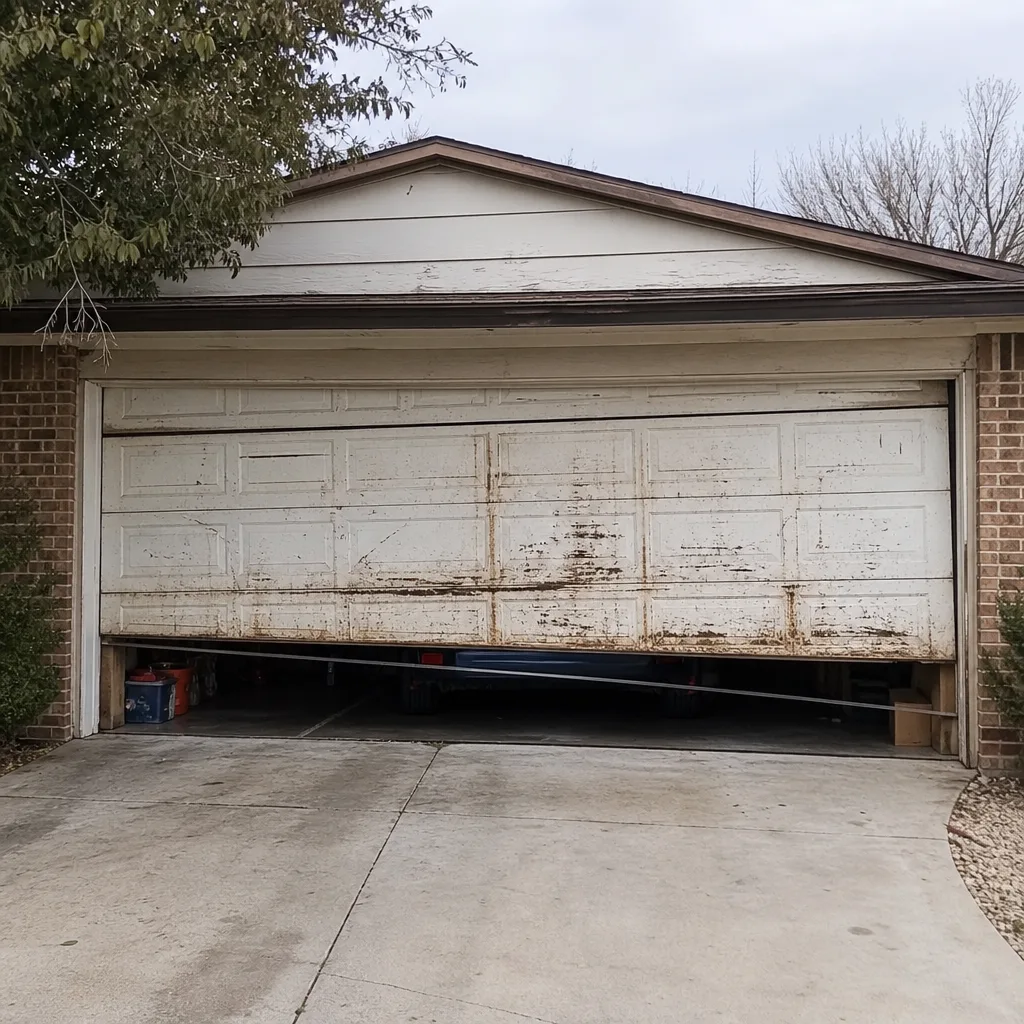 Before
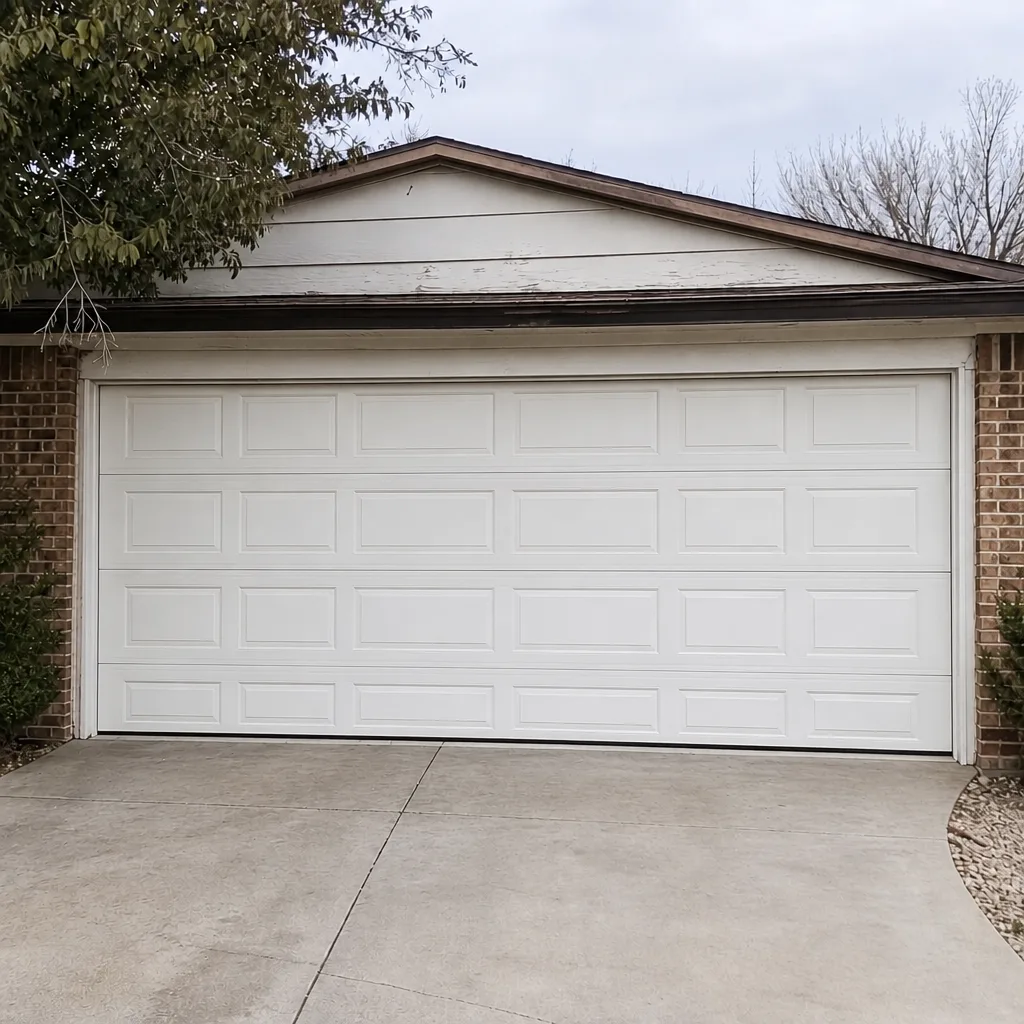 After
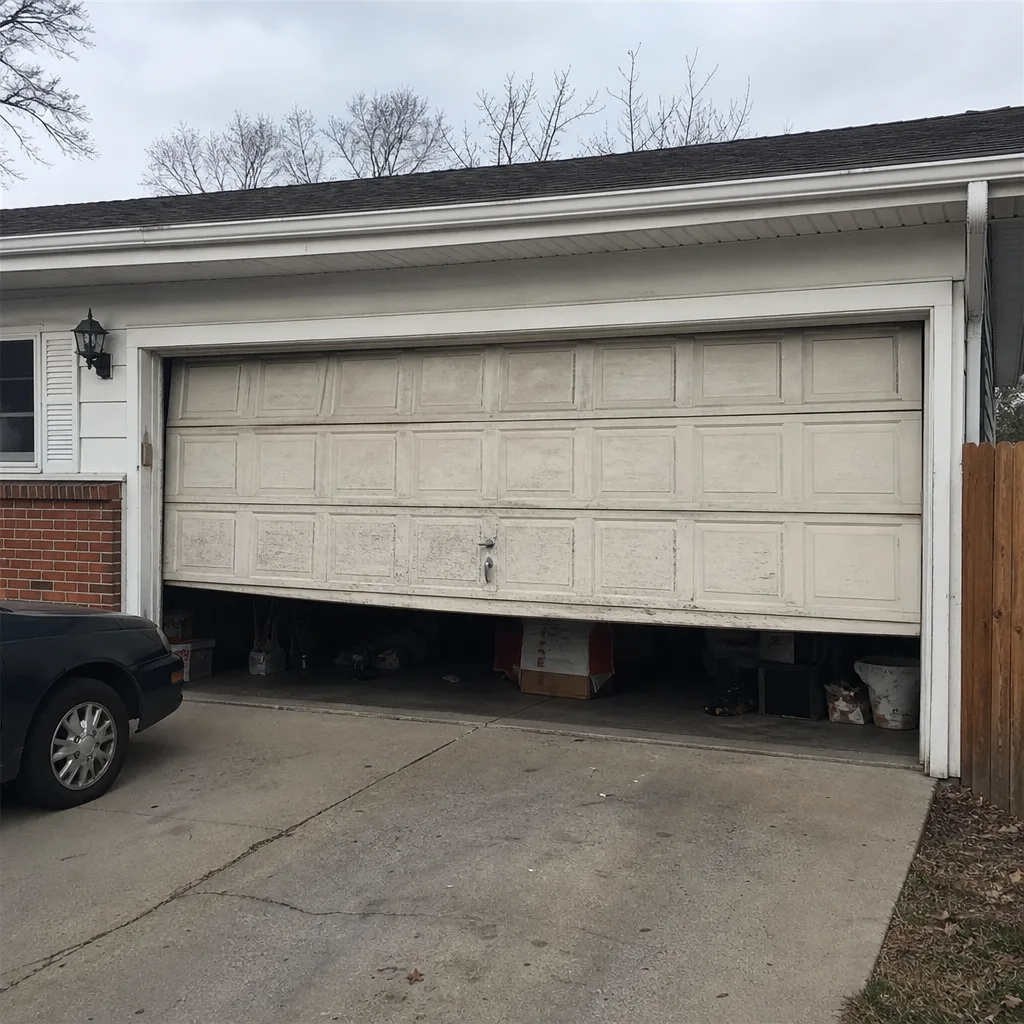 Before
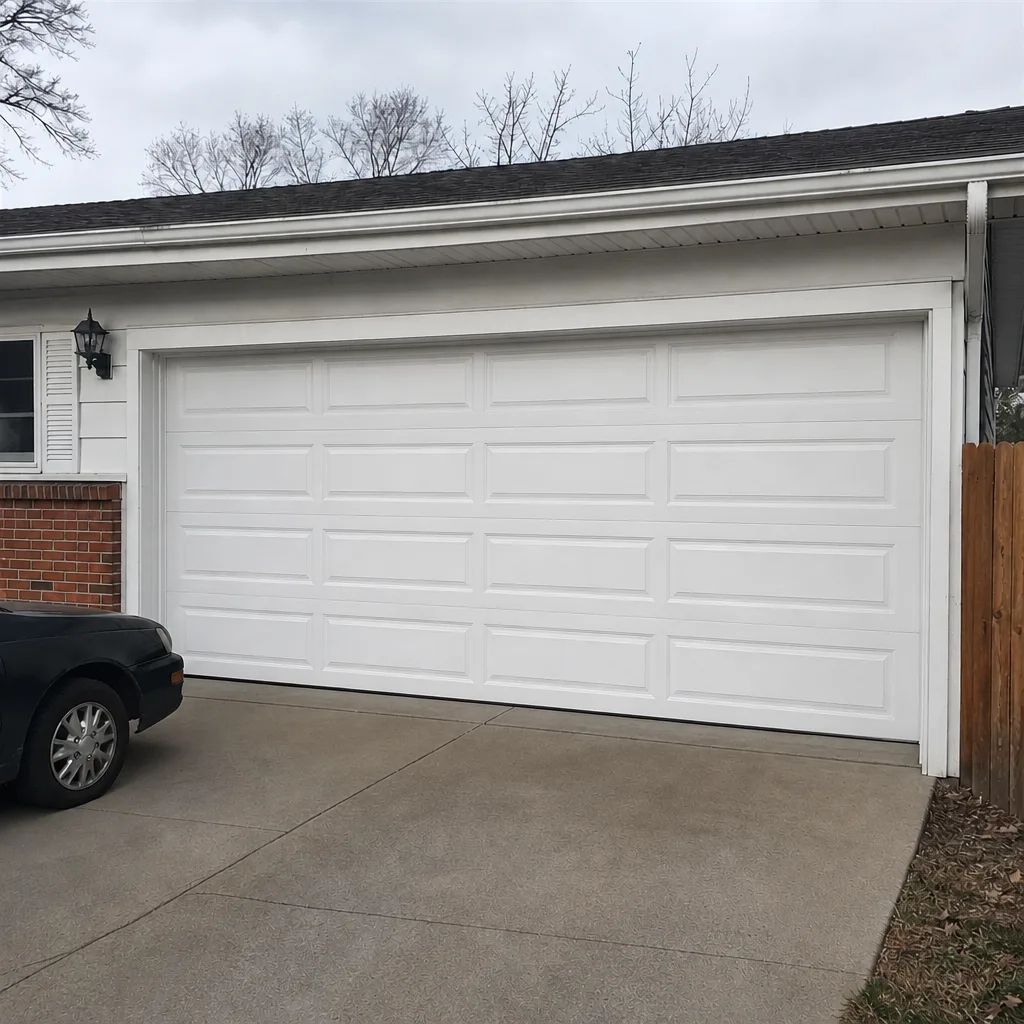 After
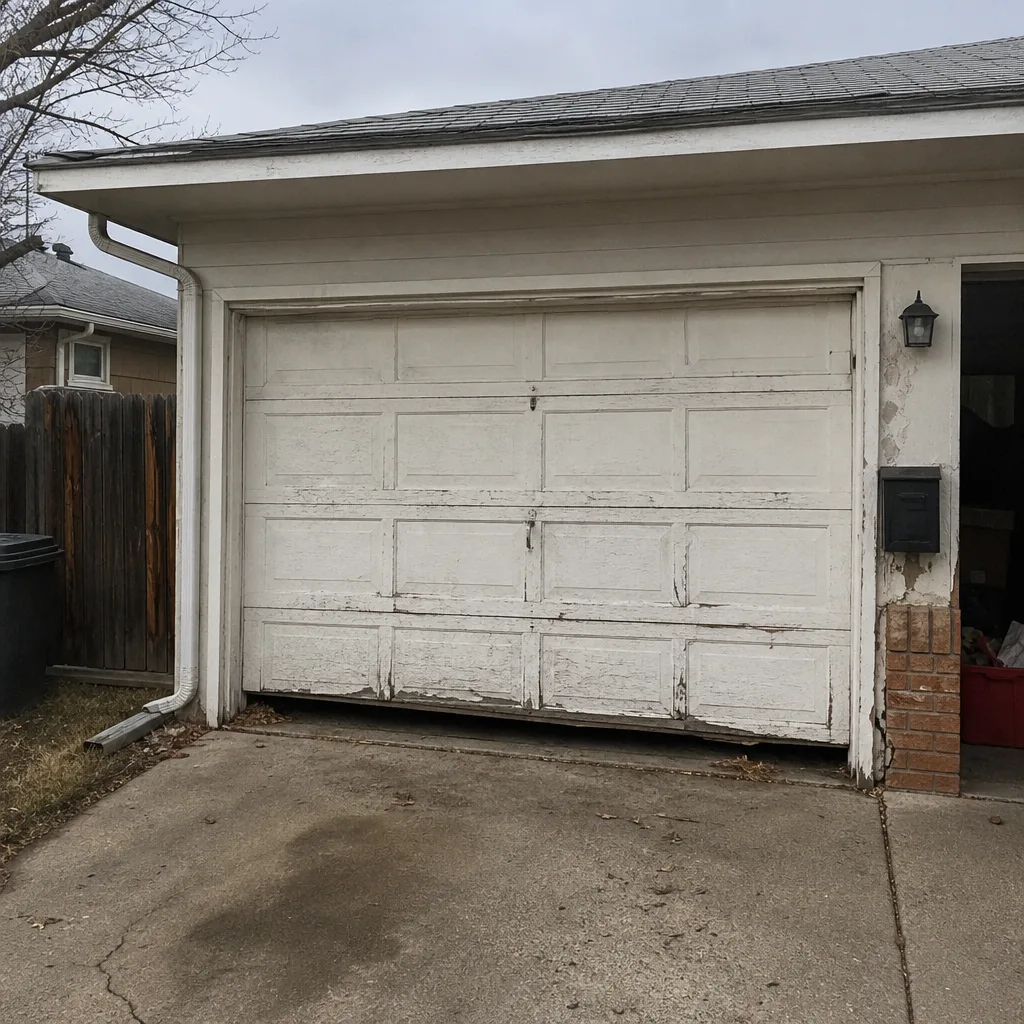 Before
 After
When to Call a Professional
Call us when a spring has snapped or looks stretched, when a cable is frayed or off the drum, when the door is off its track or hanging crooked, when the safety reverse fails its test, or when a grinding, popping, or squealing sound has appeared and stayed. Those are the signs that move a job from maintenance to a real repair, and calling early is what keeps the cost down and the door safe. If you’re not sure whether a sign is serious, a quick call can sort it out. We offer free estimates in Englewood. Call (833) 513-8729. We answer 24/7. Fast dispatch from 7am to 7pm, Sunday through Friday.
Frequently Asked Questions
Spring repair in the Englewood market typically runs around $180 to $340 for one spring, and most doors have two matched springs that should be replaced together, so a pair usually costs about twice that. The exact price depends on the spring size, the door weight, and whether anything else is worn. The written estimate you get before any work starts is the price, so there are no surprises when the job’s done. Call (833) 513-8729 for an exact quote, and estimates are free.
No. Springs are under extreme tension and are the most dangerous part of a garage door to work on. A release while you’re holding it can cause serious injury, and it’s genuinely the one repair we tell every Englewood homeowner to leave to a trained technician. Call (833) 513-8729 if a spring has broken or lost tension.
Yes, if the door runs slower in cold weather and normal in warm weather. That pattern usually points to a spring that’s losing tension and has no reserve left. It’s an early warning, not an emergency, so it’s a good moment to schedule rather than wait. Call (833) 513-8729 for a free estimate.
Quarterly is the right rhythm, and again any time the door feels or sounds different. It takes about 30 seconds. A door that drifts down after you lift it halfway needs service. Call (833) 513-8729 if yours doesn’t hold.
Yes. Most repair visits, including spring and opener work, can be scheduled same-day when you call. A door that won’t open at 6 a.m. gets the same priority as a scheduled service. Call (833) 513-8729. Fast dispatch from 7am to 7pm, Sunday through Friday.
Our technicians have up to 11 years of experience and the local pros we connect you with are licensed and insured as their state requires. The price is quoted and agreed in writing before any work starts, so it doesn’t change once we’re on site. Call (833) 513-8729 for a free estimate.
The Bottom Line
Most garage door failures start as small signals: a new grind, a door that drags on cold mornings, a cable with stray strands, a balance test that won’t hold. In Englewood, cold snaps and spring wind add to the wear, which makes those signals show up earlier than they might elsewhere. Do the visual check after a freeze and run the balance test quarterly. When a sign shows up, sort it on the schedule-this-week versus stop-using-the-door split, and act before the failure. That’s what keeps you out of the driveway emergency. And when a sign turns serious, call Englewood Garage Door Repair Pros at (833) 513-8729 for a free estimate and a clear next step.
The same specialist who diagnoses a worn spring can handle the opener repair and the full installation when the door is ready to be replaced. Whether you need garage door repair, garage door opener repair, or garage door spring repair, our Englewood Garage Door Repair Pros team is the specialist for your exact brand and model, working with the exact system in your garage.
Written by the team at Englewood Garage Door Repair Pros.